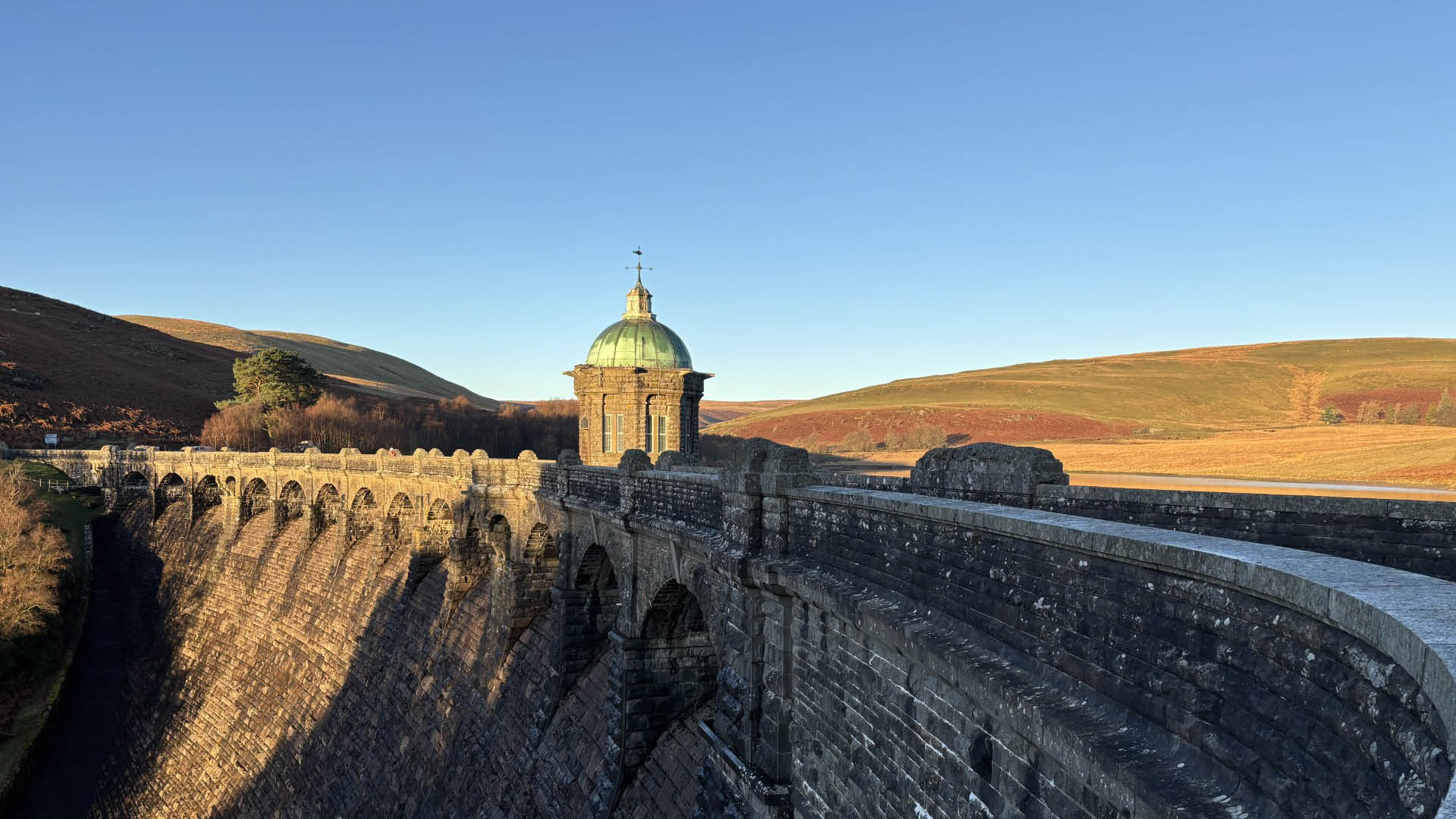
Glenfield Invicta was an integral part of the team that specified, designed, fabricated, installed, and commissioned a new fixed cone discharge valve at the base of the Craig Goch dam wall complete with upstream reservoir specification isolation gate valve.
Craig Goch – ‘red rock’ in Welsh - is an impressive Grade 2* listed dam located 28 miles east of Aberystwyth in Wales.
Part of the beautiful Elan Valley network of dams and reservoirs, Craig Goch was constructed between 1897 and 1904 by Birmingham Corporation to supply water to the rapidly growing population of the West Midlands. Craig Goch stands 52m above the level of Birmingham and water is supplied through a 72-mile pipeline with a gradient of 1 in 2,300; it takes over 2 days for water to travel down the pipeline to Birmingham’s Frankley Reservoir.
To ensure Craig Goch can continue to function effectively for a further one hundred years and beyond, Dŵr Cymru Welsh Water developed a comprehensive three-year programme of maintenance and upgrade works to be completed by the end of 2025. A key element of these works was to increase Craig Goch’s drawdown capacity to ensure its ability to respond effectively to extreme weather events.
Glenfield Invicta was an integral part of the team that specified, designed, fabricated, installed, and commissioned a new fixed cone discharge valve at the base of the Craig Goch dam wall complete with upstream reservoir specification isolation gate valve.
Existing Craig Goch Drawdown Capacity
The Victorian engineers who designed Craig Goch ensured that drawdown – the ability to quickly reduce the water level in a reservoir in the event of an emergency – was embedded from the start.
The 37m high Craig Goch masonry dam wall is designed to act as a man-made 390 feet long waterfall in extreme rainfall, with water passing through the thirteen segmental arches at its crest and cascading down the face before eventually flowing into the Pen-y-Garreg reservoir downstream.
At each end of the Craig Goch dam there are spillway channels that widen as they descend. The spillways direct water away from the dam’s base in order to protect its structure and foundations.
Built into the structure of the dam is an integral outlet pipe. The outlet, controlled from the dam’s valve tower, is used to modulate flows regardless of whether the reservoir has reached spillway level.
Upgrading Craig Goch's Drawdown Capacity
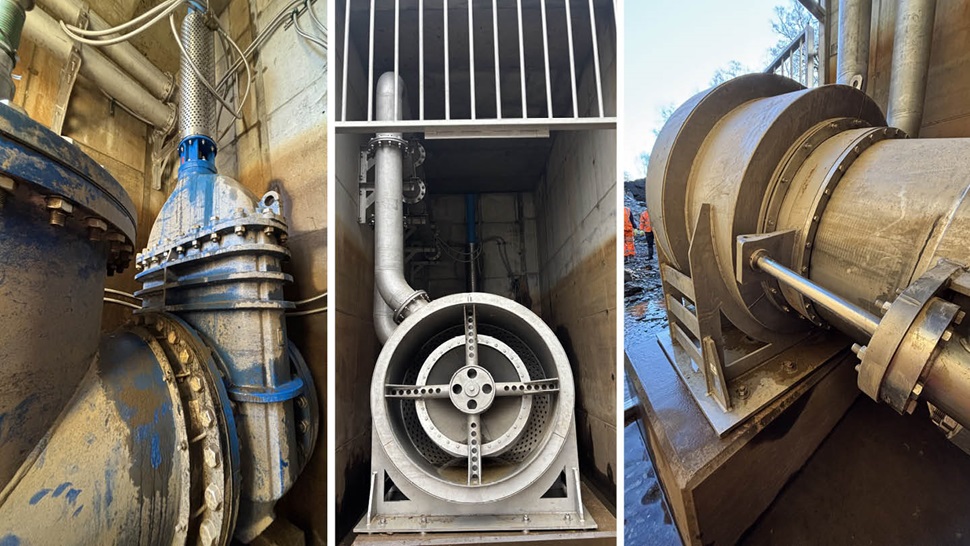
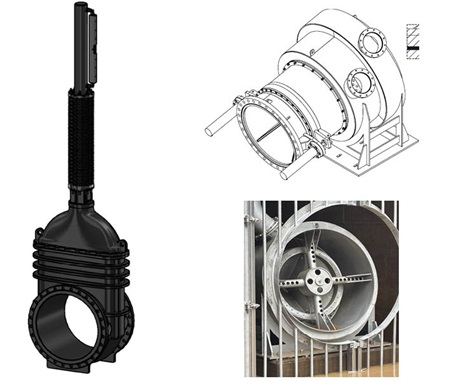
Although the dam wall is designed to act as a waterfall, its long-term structural integrity would be improved if alternative drawdown capacity options could be increased before the reservoir level reaches the dam’s crest. To achieve this, it was decided to install a fixed cone discharge valve at the base of the dam wall, connected to the existing outlet pipe. This valve’s role is to safely discharge large volumes of water and dissipate the energy in the water being released in order to eliminate potential scouring and erosion.
Greg Morris, Glenfield Invicta’s Dams, Reservoirs and Hydro Manager, worked alongside the engineering consultant and construction teams on the project to optimise valve type and specification:
“In most cases a fixed cone discharge valve operates in atmospheric (open air) conditions. At Craig Goch, the location of the outlet pipe at the base of the dam wall, and the nature of the downstream ravine into which water was to be discharged, meant that the fixed cone discharge valve had to function effectively in all scenarios: submerged, semi-submerged and atmospheric.
Working in partnership with Orbinox, a fellow AVK company, a fixed cone discharge valve design was developed to enable it to work in all conditions. A key element was the incorporation of specially designed air inlets.
After completion of the fixed cone valve assembly, the Factory Acceptance Test (FAT) involved a three-way link up between engineers in Wales (Dŵr Cymru Welsh Water), Spain (Orbinox), and Scotland (Glenfield Invicta); a unique set-up in my twenty-five years of experience. Fortunately, all went to plan."
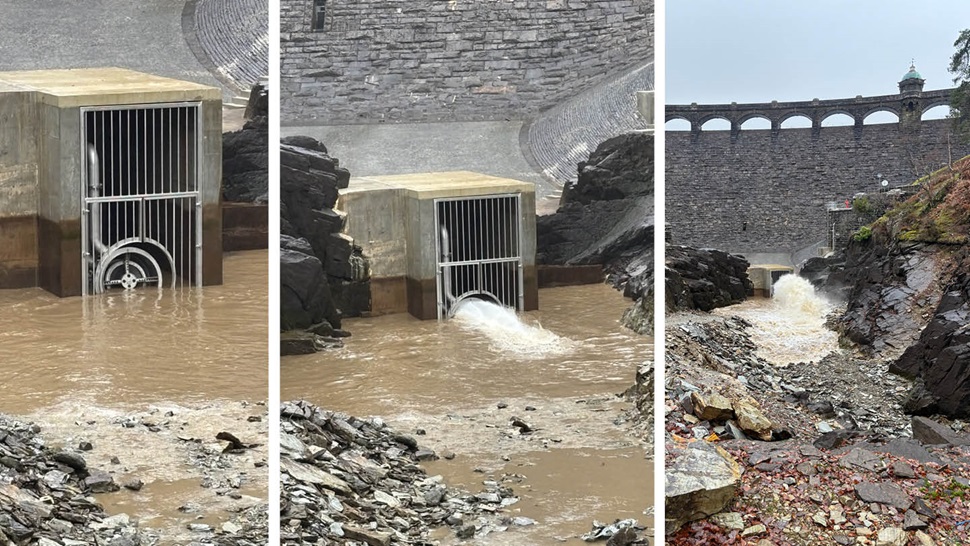
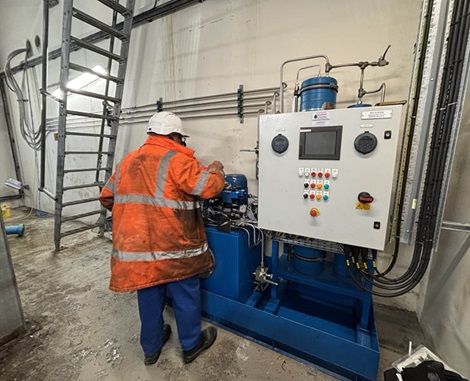
The configuration on site involved a DN900 Series 54 AVK reservoir-specification gate valve located upstream of the fixed cone discharge valve. The gate valve provides upstream isolation, enabling the discharge valve to be taken offline for inspection and possible maintenance as and when required. Both valves are housed in a specially-constructed concrete chamber at the base of the dam wall. In 1997 a small hydropower station was constructed on the east bank at the base of the dam, and it was decided to locate the hydraulic controls for the valves in its turbine house, with hydraulic hoses running from the turbine house to the newly built concrete valve chamber. An air supply was established on the west bank to aid the discharge performance of the terminal fixed cone valve.
The configuration on site involved a DN900 Series 54 AVK reservoir-specification gate valve located upstream of the fixed cone discharge valve. The gate valve provides upstream isolation, enabling the discharge valve to be taken offline for inspection and possible maintenance as and when required. Both valves are housed in a specially-constructed concrete chamber at the base of the dam wall. In 1997 a small hydropower station was constructed on the east bank at the base of the dam, and it was decided to locate the hydraulic controls for the valves in its turbine house, with hydraulic hoses running from the turbine house to the newly built concrete valve chamber. An air supply was established on the west bank to aid the discharge performance of the terminal fixed cone valve.
Commissioning of the valves was far from straightforward:
"Part of my role on the project was to oversee the commissioning of the valves and hydraulic controls at Craig Goch. During commissioning, the temperature dropped to -7°C. The recently installed hydraulic system had to be exercised, and the control panel settings were modified to ensure the correct positioning for both valves. Wet commissioning for this type of valve is always an exciting and nervy experience but it was fantastic to see the valves discharging large volumes of water into the downstream reservoirs. Both the gate valve and discharge valve were tested at several incremental open positions up to a maximum discharge rate of 6.3m3/s.
Craig Goch was a fascinating project to work on. I particularly valued the close collaboration with the client (DCWW) and the consultant/contractor (Mott MacDonald JN Bentley) which contributed hugely to a successful and rewarding experience."